Summer Solstice in Iqaluit: Where the Sun Refuses to Set
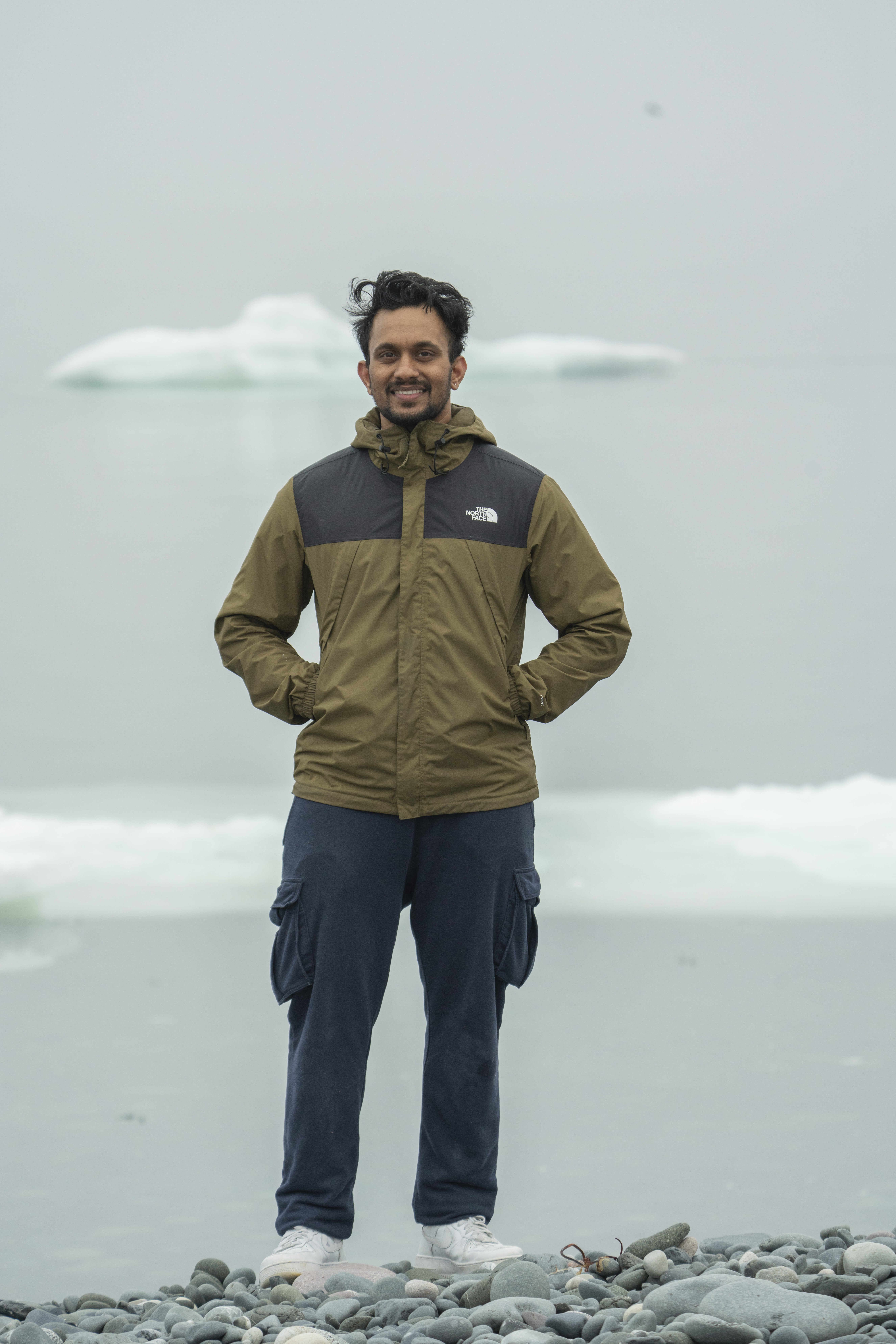
There is something strange about summer in Iqaluit.
The landscape is familiar, the rocky hills, the open water, the tundra stretching toward the horizon, but the light changes everything. As the summer solstice approaches, the sun seems to forget that it is supposed to disappear. Evening slowly becomes night, night becomes morning, and before you realize it, another day has begun.
In Iqaluit, summer is not simply a season. It is an experience of light.
For someone behind a camera, it is almost impossible not to be drawn outside.

A Different Kind of Summer
Coming from a place where summer is defined by heat, long afternoons, and the occasional monsoon, the Arctic summer feels almost unreal.
There are no palm trees or warm nights spent waiting for the air to cool. Instead, there is tundra, cold water, exposed rock, and a sky that seems to stretch endlessly above you.
Yet there is an energy here that is difficult to describe.
People spend more time outside. Boats move across Frobisher Bay. Trails become busy. Families gather on the land. The city feels more alive as everyone takes advantage of the short Arctic summer.
And above it all, there is the sun.
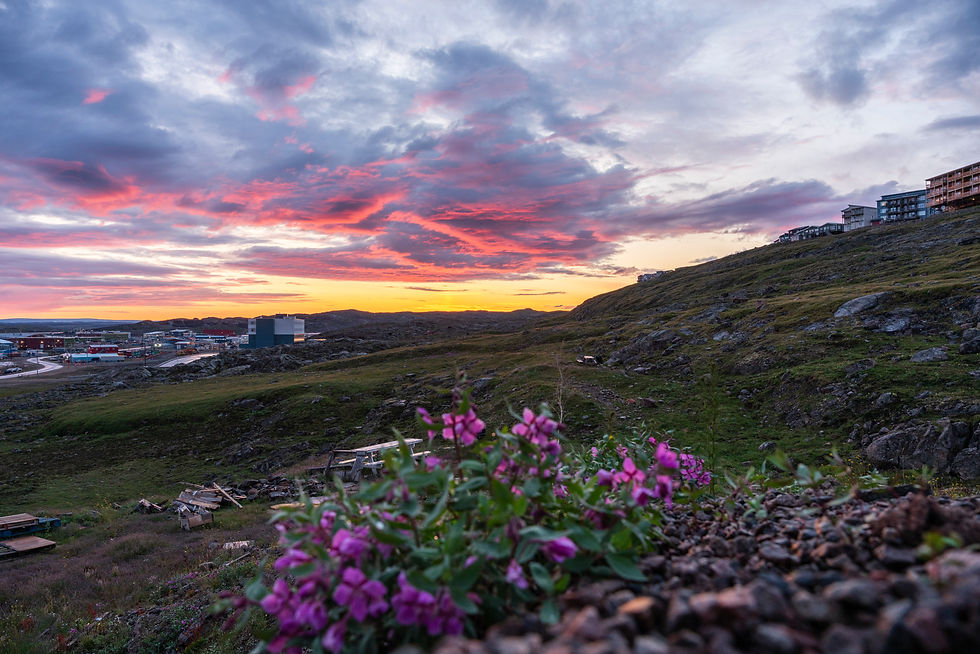
Around the solstice, the quality of light becomes something I find difficult to ignore. The sun stays low enough to create long shadows and soft, warm tones, but it never quite gives the landscape the darkness you would expect at night.
Instead, Iqaluit exists in this beautiful in-between.
Photographing the Endless Daylight
For me, this is where photography becomes more than simply documenting a place.
The Arctic light constantly changes the way I see Iqaluit.
A familiar hillside can look completely different depending on the hour. The same stretch of coastline can shift from bright and expansive during the afternoon to soft and almost dreamlike later in the evening.
Sometimes I find myself carrying my camera without having a specific photograph in mind. I simply walk, watch, and wait.
The landscape does the rest.
A boat crossing the bay can become a small silhouette against a huge sky. A person walking across the tundra can suddenly give scale to the vastness of the land. Clouds catch the last warmth of the sun, while the mountains turn into layers of blue and grey.
These are the moments I look for, not necessarily the spectacular ones, but the quiet moments that make you stop and look twice.
Seeing Iqaluit Through Light
Living in the Arctic has changed the way I think about landscape photography.
The beauty here does not always announce itself.
Sometimes it is found in the texture of the rocks, the movement of the water, or the subtle colours of the tundra. Sometimes it is simply the way sunlight falls across a familiar landscape at an unexpected hour.
The summer solstice brings all of these details to life.
It reminds me that photography is often about slowing down enough to notice what is already there.
Iqaluit does not need dramatic sunsets to be extraordinary. It does not need tropical colours or towering forests.
It has its own language of light.
And during the Arctic summer, that language becomes almost impossible to ignore.
Chasing the Light
The summer solstice is one of those experiences that is difficult to fully capture in photographs.
A photograph can preserve a moment, but it cannot completely communicate what it feels like to stand outside late at night with the sun still hanging above the horizon.
It cannot capture the silence of the land, the cold air against your face, or the strange feeling of realizing that you have completely lost track of time.
But perhaps that is why I keep photographing it.
Every frame is an attempt to hold onto a small part of that feeling—to share the quiet wonder of an Arctic summer and to show Iqaluit through the light that makes it unlike anywhere else.
Here, summer does not simply arrive.
It lingers.
And for a few weeks around the solstice, the sun seems to remind us that there is always more to see.


Comments